SEO & Lead Generation
  Google Adwords Management
 Social Media Management
 Ecommerce Marketing
 WordPress & Shopify Services
 Website & App Designing
  Website Speed Optimization
  Website Hosting Services
  Amazon PPC Marketing
  Landing Page Designing
 Logo Designing Services

 ×
×

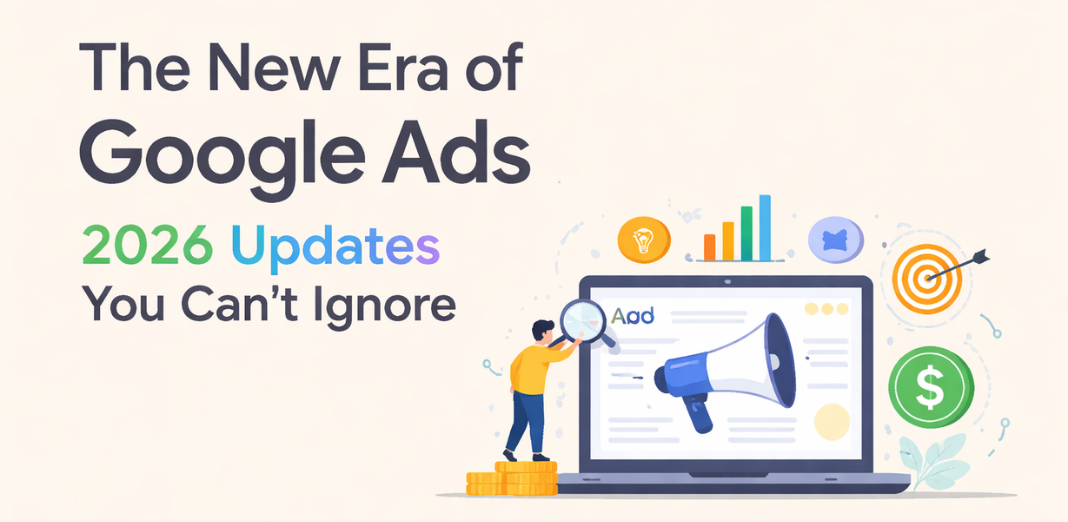
2026 is redefining how Google Ads works behind the scenes—and most advertisers haven’t fully caught up yet. What may seem like small updates on the surface are actually shaping a new advertising environment where budget thresholds, data access, compliance, and creative formats play a much bigger role than before.
These changes are quietly influencing campaign performance, scalability, and even account stability. Ignoring them is no longer an option. To stay competitive, advertisers need to understand not just what has changed, but how these updates fit into Google’s larger direction.
Google Merchant Center has rolled out a new “build-to-order” feature specifically for vehicle listings, allowing advertisers to showcase customizable vehicles that are not immediately available in inventory. This update is particularly beneficial for dealerships and automotive businesses that offer factory-order or personalized vehicle configurations. Instead of limiting listings to in-stock units, advertisers can now present a broader range of options tailored to customer preferences.
This change enhances the user experience by allowing potential buyers to explore customization possibilities directly within Google’s ecosystem. It also helps advertisers expand their product visibility without being restricted by physical inventory. As a result, businesses should focus on updating their listings with detailed specifications, customization options and high-quality visuals to fully leverage this feature and attract more qualified leads.
Google has implemented a significant restriction by disabling Customer Match uploads through the Ads API for accounts that are using inactive developer tokens. This move is part of Google’s broader effort to strengthen data privacy and ensure that advertisers follow strict compliance standards when handling user data.
For advertisers who rely on automated systems to upload customer lists, this update may require operational changes. Businesses must now ensure that their developer tokens remain active and compliant or shift toward manual uploads and approved integrations. This change highlights the growing importance of transparency and data protection in digital advertising, and advertisers should take proactive steps to review their data practices and align them with Google’s policies to avoid disruptions in audience targeting.
Click fraud continues to be a growing concern in the digital advertising space, and Google Ads is no exception. Invalid clicks can drain advertising budgets and distort campaign performance, making it difficult for advertisers to achieve accurate results. While Google has advanced systems in place to detect and filter fraudulent activity, some industries are experiencing an increase in suspicious traffic patterns.
To address this issue, advertisers need to adopt a more strategic approach by closely monitoring campaign data, identifying unusual spikes in clicks, and excluding suspicious IP addresses where necessary. Additionally, focusing on high-intent keywords and leveraging automated bidding strategies such as Target CPA or Maximize Conversions can help improve traffic quality. By prioritizing genuine user engagement over sheer click volume, advertisers can protect their budgets and improve overall return on investment.
Starting April 1, Google has introduced a minimum daily budget requirement of $5 for Demand Gen campaigns. This update is designed to ensure that campaigns have sufficient budget to exit the learning phase and generate meaningful results. Demand Gen campaigns rely heavily on machine learning, and without adequate budget allocation, the system may struggle to optimize effectively.
This change encourages advertisers to invest more strategically in their campaigns rather than running underfunded ads that fail to perform. Businesses should not only meet the minimum requirement but also consider allocating higher budgets to maximize reach and engagement. Combining sufficient budget with compelling creatives and precise audience targeting will be key to achieving strong performance with Demand Gen campaigns in 2026.
Google has reinforced its three-strikes policy system to ensure stricter compliance with advertising guidelines. Under this system, advertisers receive a warning for the first violation, followed by temporary restrictions for the second, and account suspension if a third violation occurs within a 90-day period. This policy applies to serious violations such as misrepresentation, unsafe content, and repeated non-compliance.
This update emphasizes the importance of maintaining high standards in ad content and landing page quality. Advertisers must regularly review their campaigns to ensure they align with Google’s policies and avoid any misleading claims or prohibited practices. Taking a proactive approach to compliance not only prevents penalties but also builds trust with users and improves overall campaign credibility.
Google has introduced new guidance around passkeys to enhance the security of Google Ads accounts. Passkeys offer a more secure and convenient alternative to traditional passwords by reducing the risk of unauthorized access and phishing attacks. This update reflects Google’s commitment to strengthening account protection in an increasingly digital and data-driven environment.
Advertisers are encouraged to adopt passkeys and enable multi-factor authentication to safeguard their accounts. By doing so, businesses can protect sensitive campaign data and maintain uninterrupted access to their advertising platforms. As security threats continue to evolve, implementing these measures is becoming increasingly essential for all advertisers.
Google has updated its Ad Grants program to allow nonprofits to optimize campaigns for offline goals such as shop visits. This change bridges the gap between online advertising and real-world engagement, enabling organizations to measure the impact of their campaigns more effectively.
For nonprofits, this update opens new opportunities to drive foot traffic and connect with local audiences. By using location-based targeting and relevant ad formats, organizations can align their digital strategies with physical outcomes. This shift highlights the growing importance of integrating online and offline marketing efforts to achieve holistic results.
Google is transforming Merchant Center into a more dynamic platform by incorporating video as a central component. With the introduction of auto-generated video assets and enhanced video integration, advertisers can now present their products in a more engaging and interactive format.
This update reflects the increasing importance of video content in digital marketing, as it significantly improves user engagement and conversion rates. Advertisers should focus on creating high-quality product videos and optimizing them for search visibility. By leveraging video effectively, businesses can stand out in a competitive marketplace and deliver a richer shopping experience to potential customers.
Google Ads now requires advertisers to obtain support authorization for certain account changes, adding an extra layer of control and security. This update is designed to prevent unauthorized modifications and ensure that critical changes are properly managed.
While this may introduce an additional step in the process, it ultimately helps maintain account integrity and reduces the risk of errors or misuse. Advertisers should plan their changes carefully and coordinate with Google support when necessary to ensure smooth execution. Maintaining clear communication and proper documentation will be essential in adapting to this new requirement.
The latest Google Ads updates clearly indicate a shift toward greater automation, stricter data privacy measures, enhanced security, and improved campaign performance standards. These changes are designed to create a more reliable and effective advertising ecosystem, but they also require advertisers to be more proactive and strategic in their approach.
By staying informed about these updates and adapting your campaigns accordingly, you can maintain a competitive edge and achieve better results. Whether it’s leveraging new features like video integration, ensuring compliance with updated policies or optimizing budgets for Demand Gen campaigns, the key to success lies in continuous learning and adaptation.

I am a performance-driven Google Ads and Meta Ads Specialist with over 1 year of hands-on experience, currently working at Kleverish Digital Marketing Agency. I specialize in planning, executing, and optimizing data-driven advertising campaigns that deliver measurable results.



 Rated 4.99/5 overall
across 100+ reviews
Rated 4.99/5 overall
across 100+ reviews