SEO & Lead Generation
  Google Adwords Management
 Social Media Management
 Ecommerce Marketing
 WordPress & Shopify Services
 Website & App Designing
  Website Speed Optimization
  Website Hosting Services
  Amazon PPC Marketing
  Landing Page Designing
 Logo Designing Services

 ×
×

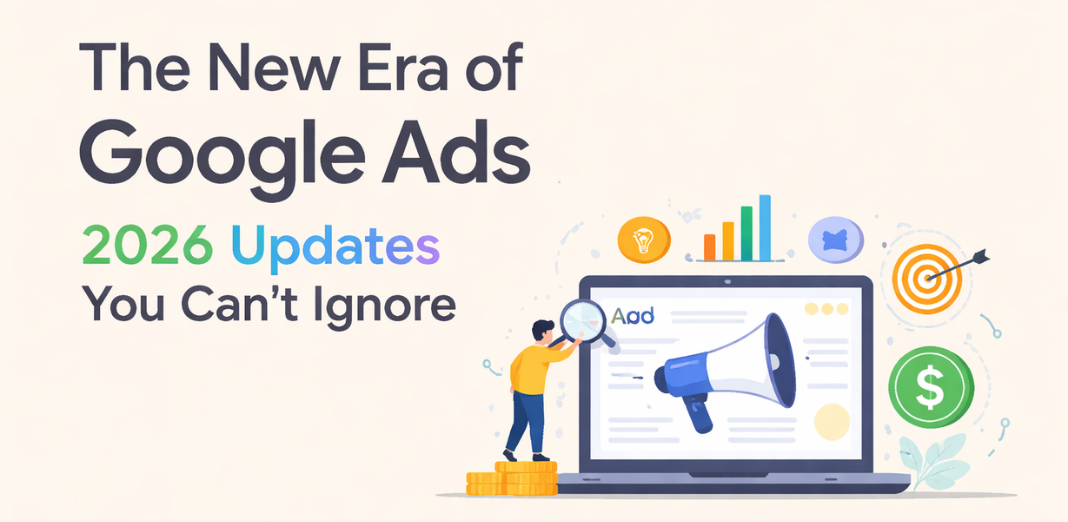
Google Ads is evolving faster than ever. With the rise of automation, AI-driven optimization,
and smarter bidding systems, advertisers must adopt more advanced strategies to stay
competitive.
In 2026, running successful campaigns is no longer about basic keyword targeting or manual bid
adjustments. Instead, it’s about understanding how Google’s algorithm works, leveraging AI
trends, and optimizing every stage of the conversion funnel.
In this guide, we’ll explore the most powerful Google Ads strategies and upcoming trends that
marketers should implement in 2026.
Modern Google Ads optimization is no longer limited to adjusting bids or testing a few keywords. Advanced advertisers now focus on understanding how the algorithm processes signals and uses data to determine when and where ads should appear.
One interesting strategy gaining popularity among experienced marketers is the “Bottom-Feeding” approach. This method involves running broad match keyword campaigns with extremely low bids. Instead of aggressively competing in high-cost auctions, advertisers allow Google’s algorithm to slowly discover profitable traffic at lower costs. Over time, the system identifies hidden search queries and user behaviors that might not appear in traditional keyword research tools.
Another important shift happening in Google Ads optimization is the move from revenue-based bidding to profit-based bidding. Many advertisers optimize campaigns using ROAS (Return on Ad Spend), but this metric often ignores the actual profit margins of a business. A campaign might generate high revenue but still produce low profitability if product costs are high. Advanced advertisers now integrate Cost of Goods Sold (COGS) into their tracking systems so that campaigns are optimized based on real profit instead of just revenue numbers.
Google’s algorithm also relies heavily on data signals to improve performance. However, many industries—especially B2B or high-ticket services—do not generate large numbers of conversions each month. When conversion data is limited, optimization becomes difficult. This is where the concept of signal stacking becomes extremely useful. Instead of tracking only final conversions such as purchases or lead submissions, advertisers feed additional behavioral signals to the algorithm. These signals help Google understand user intent earlier in the customer journey.
Common signals that can improve algorithm learning include:
By tracking these micro-conversions, advertisers provide the algorithm with more information, allowing it to optimize campaigns even when final conversions are limited.
Another hidden issue that many advertisers face is the “Iceberg Effect” in search terms. When advertisers check their search terms report, they often assume that they are seeing every keyword that triggered their ads. In reality, Google only reveals a portion of the total search queries. A large percentage of low-volume queries remain hidden, which means advertisers might unknowingly pay for irrelevant traffic.
Because of this, advanced campaign managers continuously monitor search behavior, add negative keywords regularly, and structure campaigns carefully to prevent unnecessary spending. Understanding this hidden layer of search traffic is essential for maintaining efficient campaigns.
Google Ads is entering a new phase where artificial intelligence plays a central role in how ads are delivered and optimized. Search results themselves are changing, and advertisers must adapt their strategies accordingly.
One of the biggest changes is the rise of AI-driven search experiences, often referred to as AI Overviews. Instead of simply showing a list of links, Google now uses AI to summarize information directly within the search results page. This transformation changes how users interact with search engines and how ads compete for attention.
For advertisers, this means ad copy must become more informative and aligned with search intent. Generic advertising messages are less effective in an AI-enhanced environment because users expect direct answers to their questions. Campaigns that clearly communicate value and relevance are more likely to perform well as search continues evolving.
Another important development in 2026 is the hybrid campaign structure combining Performance Max and Standard Shopping campaigns. Performance Max campaigns use Google’s machine learning to distribute ads across multiple channels, including Search, Display, YouTube, Gmail, and Discover. While this automation helps discover new opportunities, it can also reduce the level of control advertisers have over product targeting.
To balance automation with control, many advanced advertisers run a hybrid structure where Performance Max campaigns handle broad discovery while Standard Shopping campaigns focus on high-performing products and keywords. This approach allows advertisers to benefit from Google’s automation while still maintaining detailed control over certain parts of their account.
Another emerging challenge in modern advertising is creative fatigue caused by generative AI tools. With AI now capable of producing images, videos, and ad copy within seconds, many advertisers rely heavily on automated creative generation. While this improves efficiency, it also leads to a situation where many ads begin to look very similar.
When audiences see repetitive creative styles, engagement rates can drop significantly. To avoid this “creative blindness,” brands must continuously refresh their visuals and messaging. Even in an AI-driven ecosystem, originality and storytelling remain powerful tools for capturing attention.
While many advertisers focus on basic campaign optimization, there are several advanced opportunities within Google Ads that remain underutilized. These strategies can significantly improve performance, particularly for businesses with complex sales processes.
One of the biggest challenges for B2B companies is tracking conversions accurately. In many industries, leads generated through Google Ads do not convert immediately online. Instead, sales often happen through phone calls, meetings, or long sales cycles handled by a sales team. Because of this, Google Ads may only see the initial lead form submission rather than the final sale.
To solve this issue, businesses can use Offline Conversion Imports (OCI). This feature allows companies to connect their CRM system with Google Ads so that when a lead eventually becomes a paying customer, that information is sent back to the advertising platform. By providing Google with real revenue data, the algorithm can learn which leads are truly valuable and optimize campaigns accordingly.
Another opportunity that has gained popularity among local businesses is the use of Local Service Ads (LSAs). These ads appear above traditional search ads and operate on a pay-per-lead model rather than a pay-per-click system. Because advertisers only pay when a qualified lead contacts them, LSAs often deliver better cost efficiency compared to traditional campaigns.
Industries such as home services, legal services, medical services, and repair businesses have seen particularly strong results with LSAs. For many local companies, shifting a portion of their budget toward these ads can significantly improve lead quality.
Brand protection has also become increasingly important with the rise of automated campaign types such as Performance Max. Without proper campaign settings, automated campaigns may compete with a company’s own branded keywords. This means businesses could end up paying for traffic that they would have received organically.
To prevent this situation, advertisers now use brand exclusion settings within their campaign structure. This ensures that automated campaigns focus on acquiring new customers rather than consuming budget on branded searches that already belong to the business.
While technical optimization and automation are essential, successful advertising still relies heavily on understanding human psychology. Many businesses focus exclusively on direct conversion campaigns, but this approach ignores the importance of building trust before asking users to take action.
One effective method used by modern advertisers is the Sequential Storytelling Framework. Instead of immediately pushing users toward a purchase or lead form, advertisers introduce their brand through multiple stages of engagement.
In this strategy, video and display campaigns often play an important role during the early stages of the customer journey. These campaigns help introduce the brand and educate potential customers about the product or service. Once users become familiar with the brand, search campaigns capture their intent when they begin actively looking for solutions.
This approach creates a smoother customer journey because users encounter the brand multiple times before making a decision. As a result, conversion rates tend to increase while cost per acquisition decreases.
Another important factor in modern advertising is demand generation. Search ads are highly effective for capturing existing demand, but they cannot create new demand on their own. Video advertising platforms such as YouTube allow brands to reach potential customers before they even begin searching for a solution.By combining awareness campaigns with high-intent search campaigns, advertisers can build a complete marketing funnel that drives both brand recognition and direct conversions.
The future of Google Ads will be shaped by three major forces: automation, data signals, and creative differentiation. As Google continues integrating artificial intelligence into its advertising ecosystem, campaign management will become more focused on strategic decision-making rather than manual adjustments.
Advertisers who provide more data signals—such as behavioral events, offline conversions, and customer insights—will help Google’s algorithm make smarter decisions. At the same time, businesses that invest in unique and engaging creative content will stand out in an increasingly automated environment.
Success in Google Ads will therefore depend on balancing technology, strategy, and creativity. Businesses that adapt to these changes early will gain a strong competitive advantage in the evolving digital advertising landscape.

I am a performance-driven Google Ads and Meta Ads Specialist with over 1 year of hands-on experience, currently working at Kleverish Digital Marketing Agency. I specialize in planning, executing, and optimizing data-driven advertising campaigns that deliver measurable results.



 Rated 4.99/5 overall
across 100+ reviews
Rated 4.99/5 overall
across 100+ reviews