SEO & Lead Generation
  Google Adwords Management
 Social Media Management
 Ecommerce Marketing
 WordPress & Shopify Services
 Website & App Designing
  Website Speed Optimization
  Website Hosting Services
  Amazon PPC Marketing
  Landing Page Designing
 Logo Designing Services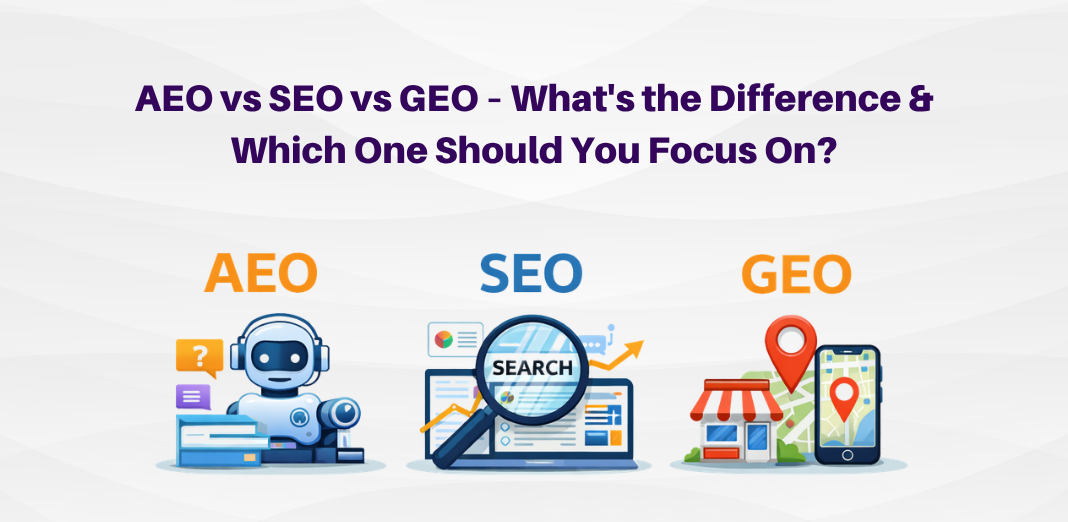

 ×
×

Search behavior is changing quickly. A few years ago, most users simply typed a keyword into Google and clicked a website. Today, people ask questions, use voice assistants, and even rely on AI tools to get answers instantly.
Because of this shift, digital marketing strategies are evolving. Businesses now need to understand the difference between SEO vs AEO vs GEO.
Traditional Search Engine Optimization (SEO) still helps websites rank on Google. However, Answer Engine Optimization (AEO) focuses on appearing as the direct answer to a question. At the same time, Generative Engine Optimization (GEO) helps content appear in responses generated by AI tools like ChatGPT or Gemini.
Understanding these strategies is important for modern AI search optimization. Businesses that adapt early can gain more visibility, traffic, and authority online. At Kleverish, we closely study these evolving search trends to help businesses stay visible in both search engines and AI-powered platforms.
In this guide, we will explain SEO vs AEO vs GEO, how they work, and how businesses can optimize their content for the future of search.
Search Engine Optimization (SEO) is the process of improving a website so it ranks higher on search engines such as Google and Bing.
When users search for something like:
digital marketing agency in Ahmedabad
SEO services for small businesses
how to improve Google rankings
Search engines analyze websites and display the most relevant results.SEO helps your website appear in those results.
Even with the rise of AI tools, Google still processes billions of searches every day. People rely on search engines to find products, services, and solutions.
That is why SEO remains the foundation of digital visibility.
SEO helps businesses:
Without proper SEO, a website may struggle to appear in search results. Digital marketing teams like Kleverish use SEO as the core strategy to help businesses improve their long-term online visibility.
A strong SEO strategy includes several key components.
Keyword research helps identify what users search for online. Businesses use these insights to create content that matches search intent.
Examples include:
On-page SEO focuses on optimizing individual web pages. This includes:
These elements help search engines understand the content better.
Technical SEO ensures search engines can crawl and index your website efficiently. Important factors include:
High-quality content improves search rankings. Helpful articles, guides, and blog posts attract both users and search engines.
SEO remains the starting point for any successful digital marketing strategy.
Answer Engine Optimization (AEO) focuses on optimizing content so search engines can display it as a direct answer to a question.
Instead of just ranking a page, AEO helps your content appear in:
These results appear above normal search listings.
Many marketers ask what AEO is in SEO.
AEO is a strategy that builds on SEO. While SEO helps a website rank, Answer Engine Optimization helps search engines extract and display your content as a quick answer.
For example, if someone searches:
“What is the difference between SEO and AEO?”
Google may display a short paragraph directly at the top of the page.That answer usually comes from content optimized for AEO.
Search behavior has become more conversational. Instead of typing short keywords, users ask complete questions such as:
AEO helps search engines quickly understand and display answers to these questions.
Businesses can improve their Answer Engine Optimization by following simple steps.
These strategies increase the chances of appearing in featured snippets and voice search.
Generative Engine Optimization (GEO) is a newer strategy focused on optimizing content for AI-generated answers.
Instead of showing links, AI tools generate responses by analyzing multiple sources across the web.
Popular AI platforms include:
When users ask questions on these tools, the AI generates an answer based on the information it finds online.
Generative Engine Optimization focuses on making content clear, structured, and trustworthy so AI systems can understand and reference it.
Unlike traditional SEO, AI systems analyze content based on meaning and relevance rather than just keywords.
AI tools are quickly becoming a major source of information. Many users now ask AI assistants questions instead of browsing multiple websites.
Examples include:
Content that provides helpful explanations and clear insights has a higher chance of being referenced by AI tools.
Businesses can improve Generative Engine Optimization by creating content that is:
Digital marketing teams such as Kleverish often combine GEO strategies with traditional SEO to ensure content performs well across both search engines and AI platforms.
Understanding the difference between SEO, AEO, and GEO helps businesses adapt to modern search behavior. While SEO focuses on ranking in search engines, AEO targets direct answers, and GEO helps content appear inside AI-generated responses.
| Strategy | Main Goal | Where It Appears | Content Focus |
| SEO (Search Engine Optimization) | Rank higher in search engine results | Google, Bing, traditional search results | Keyword-optimized blogs, webpages, and backlinks |
| AEO (Answer Engine Optimization) | Provide quick and direct answers | Featured snippets, voice assistants, zero-click results | Question-based content and clear structured answers |
| GEO (Generative Engine Optimization) | Appear in AI-generated responses | AI tools like ChatGPT, Gemini, and AI search results | Deep, authoritative, well-structured content |
The most effective digital marketing strategy today combines SEO + AEO + GEO to maximize visibility across search engines, voice assistants, and AI platforms.
The growth of AI tools has created a new field called AI search optimization.
This approach focuses on making content visible across:
Businesses that adapt to AI search optimization early can gain a major competitive advantage.
Creating helpful, structured, and authoritative content increases the chances of appearing in both search engines and AI responses.
When deciding between SEO vs AEO vs GEO, businesses should focus on their current digital goals.
Start with SEO. A strong SEO foundation helps search engines understand and rank your content.
Add AEO strategies to capture question-based searches and featured snippets.
Focus on GEO and AI search optimization to improve visibility in AI-generated responses.
The most effective approach is combining all three strategies.
Digital marketing agencies like Kleverish often implement this combined strategy to help brands succeed in modern AI-driven search environments.
Search technology is evolving rapidly, and businesses must adapt to stay competitive online. Understanding SEO vs AEO vs GEO is essential for modern digital marketing.
SEO helps websites rank in traditional search results and attract organic traffic. Answer Engine Optimization focuses on answering user questions directly so content appears in featured snippets and voice search. Generative Engine Optimization helps AI tools understand and reference content when generating answers.
Together, these strategies support effective AI search optimization and improve online visibility across search engines and AI platforms.
Businesses that create clear, helpful, and authoritative content will have the best chance of succeeding in this new search environment. At Kleverish, we believe that combining SEO, AEO, and GEO strategies is the key to long-term success in AI-driven search.
FAQs
1.What is AEO in SEO?
AEO stands for Answer Engine Optimization. It focuses on structuring content so search engines can display it as a direct answer in featured snippets or voice search results.
2.What is Generative Engine Optimization?
Generative Engine Optimization (GEO) is the process of optimizing content so AI tools like ChatGPT or Gemini can understand and reference it in generated responses.
3.What is the difference between SEO vs AEO vs GEO?
SEO focuses on ranking websites in search engines, AEO focuses on providing direct answers, and GEO focuses on visibility in AI-generated responses.
4.Why is AI search optimization important?
AI search optimization helps content appear not only in traditional search engines but also in AI-powered tools that generate answers for users.
5.Can one blog rank for SEO, AEO, and GEO?
Yes. A well-structured blog with clear explanations, strong headings, and helpful information can perform well across search engines, answer engines, and AI tools. This is a strategy commonly used by digital marketing teams such as Kleverish.

Hey, Kruti here! I’m a Junior SEO Executive at Kleverish, where I help optimize websites to boost search visibility and drive organic traffic. With a passion for digital strategy, I focus on keyword research, on-page SEO, and content optimization to help brands grow online. I’m always eager to learn the latest in SEO trends and love turning insights into results that matter.



 Rated 4.99/5 overall
across 100+ reviews
Rated 4.99/5 overall
across 100+ reviews