Zero Click Searches Are Dominating Google—Is Your SEO Strategy Dying?
Home / SEO Services / Zero Click Searches Are Dominating Google—Is Your SEO Strategy Dying?
A zero click search occurs when a user’s query is answered directly on the search engine results page (SERP), eliminating the need to click on any links.
These types of results are common on Google for simple queries like factual information, weather forecasts, time conversions, or math problems.
For instance, if you search “how old is Tom Cruise,” Google may display the answer right at the top of the page.
What Are Zero-Click Searches?
A zero-click search happens when a user’s query is answered directly on the search engine results page (SERP), eliminating the need to click through to a website.
Common Types of Zero-Click Features
Featured Snippets : Display quick answers at the top of Google’s results, pulled from relevant web pages.
Knowledge Panels : Appear on the right side of search results and showcase concise information about well-known entities.
People Also Ask (PAA) : Lists of related questions that expand to show brief answers, often sourced from third-party websites.
Local Packs : A group of business listings and maps that show up for location-based queries.
AI Overviews : Google’s latest generative feature that creates brief, conversational summaries using information from multiple sources.
Why They Exist
Improve user experience by answering questions faster.
Cater to mobile and voice search users who want immediate results.
Align with Google’s goal of being the “answer engine,” not just a search engine.
Why Zero Click Searches Matter to Marketers
Zero-click searches represent a shift in how search engines deliver information and how users consume it.
The Threat: Loss of Traffic
Reduced Website Visits: With answers shown on the SERP, users have less incentive to visit your site.
Lower Conversions: Fewer clicks mean fewer chances to convert leads.
Misattribution: Your content may be used without generating direct traffic or recognition.
The Opportunity: Brand Authority and Visibility
Increased Impressions: Even without clicks, appearing in SERP features builds visibility.
Trust and Credibility: Being quoted or featured by Google signals authority.
Higher Brand Recall: Repeated exposure, even without visits, helps users remember your brand.
“In a zero-click world, your brand must become the destination, not just lead to one.” — StoryChief Blog
Zero Click Search vs. Zero Click Content: What’s the Difference?
Understanding this nuance is essential:
Zero-Click Searches : Powered by Google, these occur when your content is displayed in a SERP feature and the user doesn’t click through.
Zero-Click Content : A proactive strategy where you publish content that delivers full value without requiring any clicks, particularly on social platforms.
Examples of Zero-Click Content:
A full how-to thread on Twitter (X)
A carousel post on LinkedIn summarizing a blog article
A newsletter that gives complete value without linking out
This type of content is optimized for engagement, shareability, and memorability, rather than direct traffic.
How to Win in the Zero-Click Era: Actionable Strategies
1. Optimize for Featured Snippets
Answer key questions in the first 40-60 words of a paragraph.
Use numbered or bulleted lists.
Format content clearly with proper headers.
Use FAQ sections to answer multiple questions within one page.
Pro Tip: Use tools like AnswerThePublic and Google’s “People Also Ask” to identify snippet opportunities.
2. Focus on Schema Markup
Add structured data to help search engines understand your content.
Use JSON-LD for ease of implementation.
Types to implement: FAQPage, HowTo, LocalBusiness, Product, and Organization.
Tool Suggestion: Google Structured Data Testing Tool and Schema.org documentation.
3. Own Branded Keywords
Branded searches are less likely to be zero-click because users are seeking you.
Optimize your Google Business Profile.
Secure consistent mentions across third-party platforms like review sites, Wikipedia, and directories.
Monitor Tools: Google Search Console, BrandMentions, Ahrefs Alerts.
4. Create Zero Click Content for Social Platforms
Summarize blog posts into bite-sized threads or visual posts.
Provide immediate value so users don’t need to visit a link.
Use carousels, infographics, and short-form videos.
Example:
A 6-slide LinkedIn carousel
A 90-second Instagram Reel
A 5-tweet thread with visuals
5. Build Topical Authority
Cover every relevant sub-topic in your niche.
Interlink content using a pillar-cluster model.
Demonstrate depth and breadth in your expertise.
Example:
Pillar: Content Marketing Strategy
Clusters: Content Calendars, Buyer Personas, Distribution Channels, Metrics
6. Adapt to AI Overviews
Write semantically rich and factual content.
Cover contextually related questions in each article.
Cite credible sources.
Bonus Tip: AI Overviews often summarize trusted pages—so the more helpful and comprehensive your content, the higher its chance of being quoted.
Rethinking SEO Metrics in a Click-less World
Traditional success metrics are becoming less relevant. New benchmarks include:
SERP Real Estate: How many SERP features does your site occupy?
Entity Authority: Are you part of Google’s Knowledge Graph?
Brand Searches: Is your brand name being searched more often?
On-Platform Engagement: Social shares, comments, saves, etc.
Challenges and Ethical Considerations
Traditional success metrics are becoming less relevant. New benchmarks include:
SERP Real Estate: How many SERP features does your site occupy?
Entity Authority: Are you part of Google’s Knowledge Graph?
Brand Searches: Is your brand name being searched more often?
On-Platform Engagement: Social shares, comments, saves, etc.
Challenges and Ethical Considerations
1. Content Cannibalization
Google often uses your content to answer questions without sending users to your site. Consider how much of your content to expose without attribution.
2. Attribution and Source Recognition
AI summaries can paraphrase your information without linking back. Consider licensing or controlled distribution for premium insights.
3. Strategic Content Ownership
Own your narrative. Create branded frameworks, research studies, or unique angles that make your content hard to replicate.
The Future of Search: Where Are We Headed?
AI-First SERPs: Generative results will replace lists of links.
Conversational Interfaces: Chatbots like Gemini and ChatGPT will deliver answers instead of search result pages.
Context-Aware Results: Results based on previous behavior, voice queries, and personalization.
More Visual and Voice Search: Especially critical for local SEO and product discovery.
Conclusion: Adapt or Fade
Zero-click SEO is not an obstacle; it’s an invitation to evolve.
Success in this landscape requires:
Publishing content that earns trust and gets quoted
Engaging users natively where they are
Prioritizing visibility and memorability over vanity metrics
In 2025 and beyond, those who adapt will lead. It’s not about earning the click—it’s about earning the mindshare.
 SEO & Lead Generation
  Google Adwords Management
 Social Media Management
 Ecommerce Marketing
 WordPress & Shopify Services
 Website & App Designing
  Website Speed Optimization
  Website Hosting Services
  Amazon PPC Marketing
  Landing Page Designing
 Logo Designing Services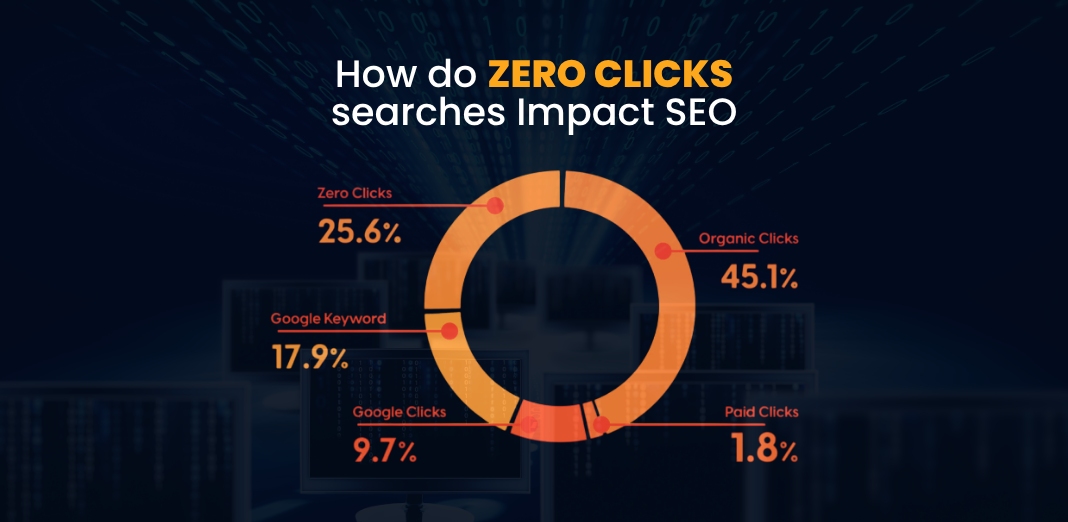

 ×
×






 Rated 4.99/5 overall
across 100+ reviews
Rated 4.99/5 overall
across 100+ reviews