SEO & Lead Generation
  Google Adwords Management
 Social Media Management
 Ecommerce Marketing
 WordPress & Shopify Services
 Website & App Designing
  Website Speed Optimization
  Website Hosting Services
  Amazon PPC Marketing
  Landing Page Designing
 Logo Designing Services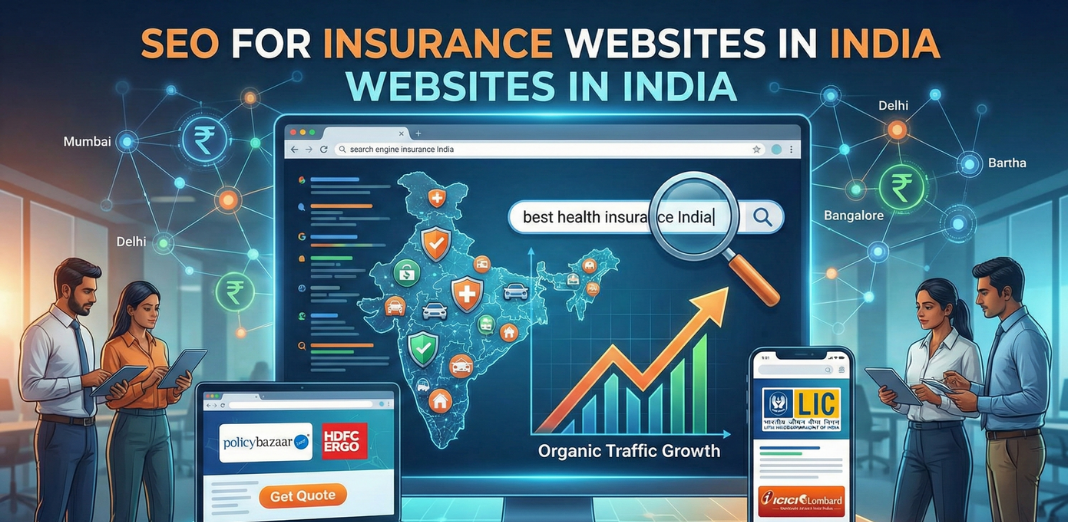

 ×
×

Search engine optimization plays a critical role in how insurance websites attract, educate, and convert users in India. Insurance is a research-driven industry. Before contacting an agent or purchasing a policy, customers search extensively to understand coverage, pricing, benefits, exclusions, and claim processes.
SEO for insurance websites is not just about ranking for competitive keywords. It is about becoming a trusted source of accurate and easy-to-understand information. When done correctly, SEO brings consistent, high-quality traffic that performs well for AdSense and builds long-term authority.
This guide explains SEO for insurance websites in India in a simple, structured, and educational way. It is designed for business owners, marketers, and professionals who want sustainable organic traffic without relying entirely on paid ads.
SEO for insurance websites is the process of optimizing a website so that it appears prominently in search engine results for relevant insurance-related queries. These queries may include informational searches, comparison-based searches, or intent-driven searches.
Insurance SEO focuses heavily on content quality, clarity, and trust signals. Since insurance is a sensitive financial product, search engines prioritize websites that demonstrate expertise, transparency, and user value.
In India, SEO also involves understanding regional behavior, mobile usage, and language preferences.
Insurance keywords are among the most searched and competitive keywords online. People search daily for health insurance plans, car insurance renewal, life insurance benefits, and claim-related information.
SEO helps insurance websites capture this demand organically. Unlike paid advertising, organic traffic does not stop when budgets pause. Over time, SEO reduces customer acquisition costs and improves brand credibility.
Another advantage of SEO is intent alignment. Users who find insurance websites through search engines are often actively looking for answers, making them more engaged and valuable.
Search intent is the foundation of effective SEO. Insurance-related searches generally fall into three categories.
Informational intent includes queries where users want to learn, such as understanding insurance terms or processes. Comparison intent involves evaluating options, features, or policy types. Transactional intent includes searches related to buying, renewing, or contacting providers.
Insurance websites must address all three intents through different types of content. Educational blogs serve informational intent, detailed pages serve comparison intent, and clear contact or inquiry pages support transactional intent.
Keyword research is one of the most important steps in insurance SEO. It involves identifying what people are searching for and how they phrase their queries.
In India, long-tail keywords perform especially well. Instead of targeting very broad terms, insurance websites benefit from detailed and specific queries related to coverage, eligibility, and processes.
Keywords related to claims, exclusions, tax benefits, and premium calculation attract high-quality traffic. Informational keywords are particularly valuable for AdSense because they generate large volumes of consistent traffic.
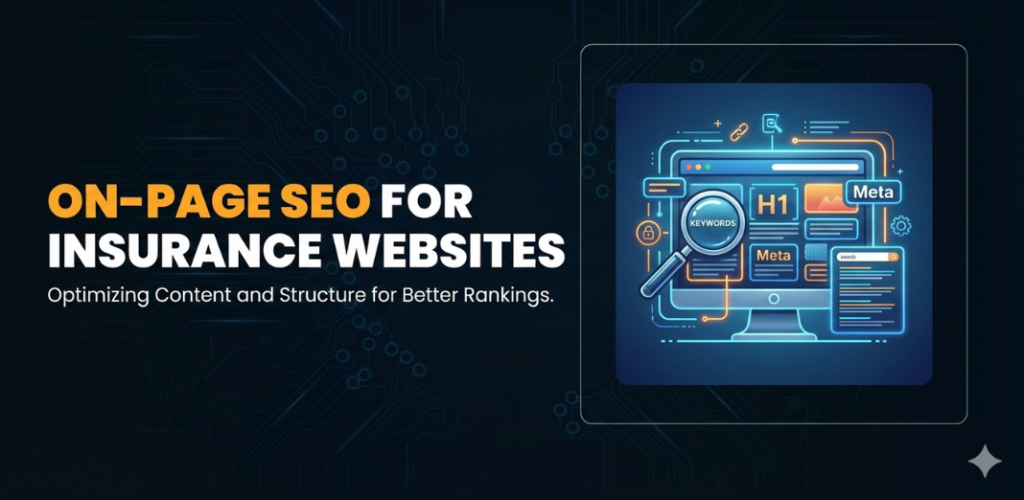
On-page SEO focuses on optimizing individual pages so search engines can understand and rank them properly. This includes title tags, headings, content structure, and internal linking.
Insurance content should be written in simple language with clear explanations. Headings should guide readers logically through the topic. Internal links help users explore related topics and improve website structure.
Well-organized pages increase dwell time, which is a positive signal for search engines and also improves AdSense performance.
Content is the backbone of SEO for insurance websites. High-performing insurance websites publish in-depth, educational content that answers real user questions.
Topics such as how insurance works, common mistakes, claim procedures, and policy comparisons attract steady traffic. Content should be updated regularly to reflect changes in regulations or industry practices.
In India, content that explains insurance in practical scenarios performs better than overly technical articles. Examples and case-based explanations help users relate to the information.
Technical SEO ensures that a website is easy for search engines to crawl and index. Insurance websites often contain many pages, making technical optimization especially important.
Page loading speed, mobile responsiveness, and secure browsing are key factors. Since many Indian users browse on mobile devices, mobile optimization is essential.
Clear navigation, proper URL structure, and error-free pages improve user experience and search engine visibility.
Local SEO is highly relevant for insurance agents and companies serving specific cities or regions. Many users search for insurance services near them.
Optimizing for local search involves consistent business information, localized content, and presence in local search results. Local SEO helps insurance websites attract nearby customers who are more likely to convert.
Educational content combined with local relevance improves visibility and trust.

Trust is a major ranking factor for insurance-related content. Search engines prefer websites that demonstrate expertise and reliability.
Trust-building elements include detailed content, transparent explanations, clear contact information, and consistent branding. User engagement signals such as time spent on site also influence rankings.
Insurance websites that focus on educating rather than selling tend to perform better in organic search.
Link building helps improve domain authority and search rankings. For insurance websites, quality matters more than quantity.
Links from relevant, authoritative sources improve credibility. Educational content naturally attracts backlinks over time.
Avoiding low-quality or manipulative link-building practices is essential, as these can harm long-term SEO performance.
SEO-friendly insurance content is naturally compatible with AdSense monetization. Informational articles generate long reading sessions and multiple page views.
Content should be structured to allow ads to appear naturally without disrupting readability. Clear sections, paragraphs, and headings improve user experience and ad visibility.
High-quality SEO traffic often results in better AdSense RPM, especially in the insurance niche.
Measuring performance helps determine whether SEO efforts are effective. Metrics such as organic traffic, keyword rankings, and user engagement provide insights.
Insurance websites should focus on growth trends rather than short-term fluctuations. SEO is a long-term strategy that improves steadily with consistency.
Data analysis helps refine content topics and optimization efforts.
One common mistake is focusing only on competitive keywords while ignoring long-tail opportunities. Another is publishing thin or repetitive content.
Over-optimization and keyword stuffing also harm rankings. Insurance SEO works best when content is written for users first and search engines second.
Ignoring mobile users is another critical mistake in the Indian market.
SEO in the insurance industry will continue to evolve as search engines prioritize user experience and content quality. Educational and trustworthy content will remain central.
As users rely more on search engines for financial decisions, insurance websites that provide clarity and transparency will benefit the most.
SEO will increasingly support long-term brand authority rather than short-term visibility.
SEO for insurance websites in India is not about shortcuts or quick rankings. It is about building a reliable source of information that users and search engines trust. By focusing on educational content, technical optimization, and user experience, insurance websites can attract steady organic traffic that performs well for AdSense and long-term growth.
1. Is SEO effective for insurance websites in India?
Yes, SEO is one of the most effective channels for attracting consistent and high-intent traffic.
2. How long does SEO take to show results?
SEO is a long-term strategy. Initial improvements may appear within a few months, with stronger results over time.
3. Is content necessary for insurance SEO?
Yes, content is essential. Insurance SEO relies heavily on detailed and educational content.
4. Can small insurance businesses benefit from SEO?
Yes, especially through long-tail keywords and local optimization.

Pinal Bhalodia is a multi-faceted professional with a diverse skill set spanning creative website design, Google Adwords, Search Engine Optimzation , IT expertise, and sales acumen. With a passion for blending technology with artistic flair, Pinal has carved a niche for himself in the dynamic intersection of these fields.



 Rated 4.99/5 overall
across 100+ reviews
Rated 4.99/5 overall
across 100+ reviews