SEO & Lead Generation
  Google Adwords Management
 Social Media Management
 Ecommerce Marketing
 WordPress & Shopify Services
 Website & App Designing
  Website Speed Optimization
  Website Hosting Services
  Amazon PPC Marketing
  Landing Page Designing
 Logo Designing Services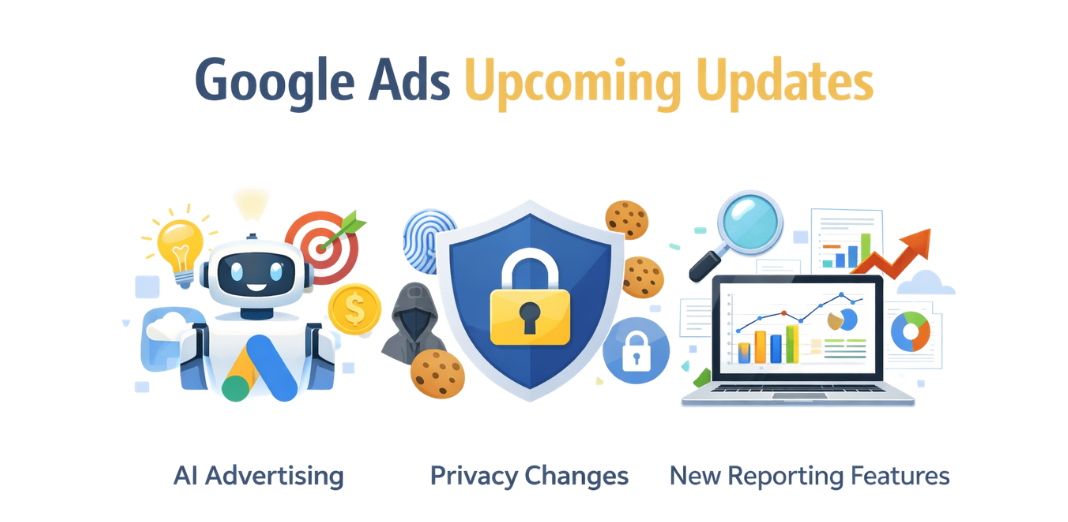

 ×
×

Google Ads is moving rapidly toward an AI-first advertising ecosystem, introducing several major updates that will significantly change how advertisers create campaigns, manage data, and analyze performance. These updates focus on automation, privacy protection, advanced reporting capabilities, and new AI-powered creative tools designed to make advertising more effective and efficient.
For advertisers, agencies, and developers who rely on Google Ads, understanding these updates is essential to stay competitive and maintain campaign performance. The upcoming improvements will reshape how campaigns are optimized, how audience data is handled, and how advertising insights are generated.
In this article, we will explore the most important Google Ads updates and innovations that advertisers should be aware of.
One of the major updates involves changes to the Google Ads API, which is widely used by developers, agencies, and marketing platforms to automate advertising tasks and integrate campaign data into internal systems.
Google regularly updates its API versions to improve security, add new features, and remove outdated functionalities. When an older API version is retired, any systems that still rely on that version will stop working until they are upgraded. This means businesses that depend on automated reporting tools, bid management platforms, or custom dashboards must ensure their systems are always updated to the latest API version.
These updates are important because many large advertisers and agencies run thousands of campaigns through automated tools. By keeping API integrations updated, businesses can continue managing campaigns smoothly without disruptions.
Another significant change focuses on user privacy and consent management. Google Ads is strengthening its requirements around how websites collect and manage user consent for advertising purposes.
Publishers and websites that display ads must now follow updated transparency and consent frameworks to ensure users clearly understand how their data is used. If proper consent signals are not detected, advertising systems may automatically switch to limited advertising modes. This can reduce targeting capabilities and limit how ads are personalized.
The goal of this change is to provide users with more transparency and control over their personal data while maintaining a sustainable advertising ecosystem. Advertisers and website owners should ensure their consent management systems are properly configured and compliant with the latest standards.
Google is also introducing changes related to how advertising data is stored and accessed. A new privacy framework is being implemented that determines how advertising systems read user consent signals before storing or using data.
Instead of relying on older tracking parameters, the new system focuses on consent signals stored within the browser environment. This approach ensures that advertising platforms respect user privacy preferences before collecting or processing data.
For advertisers, this change highlights the growing importance of first-party data strategies and privacy-friendly advertising practices. Businesses that rely heavily on remarketing and audience targeting should review their data collection methods to ensure they remain compliant with privacy standards.
Customer Match is a powerful Google Ads feature that allows advertisers to upload customer data, such as email addresses, to reach existing users across Google platforms. However, Google is introducing stricter compliance checks for accounts using API-based uploads for Customer Match.
If developer tokens or account permissions do not meet Google’s compliance requirements, the system may block Customer Match uploads through the API. This ensures that advertisers follow proper data usage policies and only upload information collected with user consent.
For businesses that rely on Customer Match for remarketing campaigns, it is important to review their data practices and ensure that all uploaded customer information follows Google’s policies. Maintaining proper account compliance will help advertisers continue using this powerful targeting feature without interruptions.
Google Ads is also transforming its reporting system by replacing traditional reports with interactive reporting tools that provide deeper insights and improved visualization.
The new reporting experience focuses on flexibility and advanced analytics. Instead of relying on static tables or downloadable reports, advertisers will be able to explore campaign data through interactive dashboards. These dashboards will allow marketers to filter metrics, analyze trends, and generate insights more efficiently.
Additionally, artificial intelligence will assist in generating reports and highlighting performance patterns automatically. This will help advertisers understand campaign performance faster and make better optimization decisions.
By shifting toward interactive reporting, Google aims to simplify data analysis and provide marketers with more powerful tools to understand their advertising performance.
Performance Max campaigns have become one of the most widely used campaign types in Google Ads because they allow advertisers to run ads across multiple Google channels from a single campaign.
However, many advertisers previously felt that Performance Max reporting lacked transparency. To address this concern, Google is introducing improved reporting features that provide deeper insights into campaign performance across individual channels.
With these enhancements, advertisers will be able to see how their ads perform across platforms such as YouTube, Display, Search, and other Google networks. This added visibility will help marketers understand which channels are driving results and where budget adjustments may be needed.
The improved reporting system will make Performance Max campaigns easier to analyze and optimize, giving advertisers greater confidence in their campaign strategies.
Google is also developing a new AI-powered assistant called Ads Advisor, designed to help advertisers manage campaigns more effectively.
Ads Advisor acts like a virtual marketing consultant within the Google Ads platform. It can analyze campaign data, identify potential issues, and suggest improvements to enhance performance. Instead of manually analyzing large amounts of data, advertisers can rely on AI-generated recommendations to optimize campaigns more efficiently.
This feature is especially valuable for small businesses and marketers who may not have extensive advertising experience. By providing intelligent suggestions and performance insights, Ads Advisor can help advertisers make better decisions and improve campaign outcomes.
Another exciting innovation involves advanced AI technology designed to help advertisers generate high-quality visuals for advertising campaigns.
With new creative generation tools, advertisers will be able to create product visuals and ad creatives using artificial intelligence. These tools can automatically generate images based on product information, allowing businesses to quickly produce professional-looking ad creatives without the need for complex design processes.
This technology can be particularly beneficial for eCommerce businesses that need to create multiple ad variations quickly. By simplifying the creative production process, AI-powered tools can reduce costs while improving ad quality.
Connected TV advertising is growing rapidly as more people consume content on smart televisions and streaming platforms. Google is introducing new interactive shopping features for ads shown on connected TV devices.
These ads will allow viewers to interact with products directly while watching content. For example, viewers may be able to scan QR codes, explore product details, or access purchase pages from their mobile devices.
This type of advertising combines the impact of video marketing with the convenience of online shopping. As connected TV continues to expand, interactive advertising experiences are expected to become an important channel for brands and eCommerce businesses.
The latest Google Ads updates clearly demonstrate that the future of digital advertising will revolve around artificial intelligence, privacy protection, and improved analytics.
AI will play a major role in campaign optimization, creative development, and performance analysis. At the same time, privacy frameworks will ensure that advertising practices respect user data and consent preferences.
Advertisers who adapt to these changes early will be able to take advantage of new opportunities while maintaining strong campaign performance. By understanding these updates and preparing for the evolving advertising landscape, businesses can stay ahead in an increasingly competitive digital marketplace.
Google Ads is moving toward a future driven by artificial intelligence, better analytics, and stronger privacy standards. These updates will make advertising more automated, data-driven, and efficient for businesses. Advertisers who stay updated with these changes and adapt their strategies early will be better positioned to improve campaign performance and achieve stronger results in the evolving digital advertising landscape.

Hello, I’m Arpan, a dedicated social media marketer passionate about crafting engaging content and driving results-driven campaigns. With a keen eye for trends and a strategic approach, I strive to elevate brands and foster meaningful connections with their audience. Let’s collaborate to unlock the full potential of your social media presence!



 Rated 4.99/5 overall
across 100+ reviews
Rated 4.99/5 overall
across 100+ reviews