SEO & Lead Generation
  Google Adwords Management
 Social Media Management
 Ecommerce Marketing
 WordPress & Shopify Services
 Website & App Designing
  Website Speed Optimization
  Website Hosting Services
  Amazon PPC Marketing
  Landing Page Designing
 Logo Designing Services

 ×
×

Artificial intelligence (AI) is transforming the way we interact with technology, and two of its most significant advancements are Generative AI and Agentic AI. These technologies, while both rooted in machine learning, serve fundamentally different purposes and cater to diverse applications. Generative AI focuses on creating new content—text, images, videos, and more—based on the patterns it has learned from existing data. On the other hand, Agentic AI goes beyond content generation to emulate human-like decision-making and autonomous problem-solving.
In this blog, we will dive deep into what makes Generative AI and Agentic AI unique, their core functionalities, and how they differ in terms of applications, autonomy, and impact. By understanding the distinctions between these two forms of AI, we can better appreciate their roles in shaping the future of industries and society as a whole.
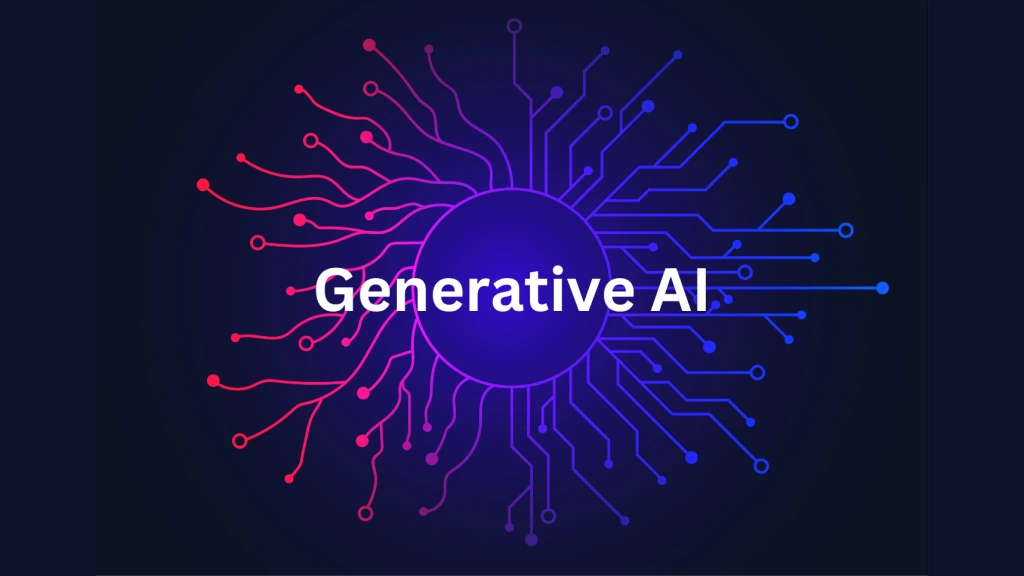
Generative AI refers to a subset of artificial intelligence focused on creating new content based on the data it has been trained on. It utilizes algorithms like deep learning and neural networks to generate text, images, videos, music, or other forms of media. Generative AI is best exemplified by models like OpenAI’s GPT series, DALL•E, and Stable Diffusion, which can produce human-like text, generate realistic images, or even compose music.
The core mechanism behind Generative AI lies in its ability to predict the next item in a sequence—be it the next word in a sentence, the next pixel in an image, or the next note in a melody. This is achieved through extensive training on massive datasets, allowing the AI to understand patterns and relationships within the data.
1) Content Creation: Capable of producing text, images, videos, or code autonomously.
2) Natural Language Processing (NLP): Generates coherent and contextually accurate responses in text-based interactions.
3) Versatility: Applications range from chatbots and virtual assistants to creative tools for art and design.
4) Data-Driven: Relies heavily on the data it’s trained on to ensure the quality and relevance of its output.
Generative AI is revolutionizing industries by automating tasks that traditionally required human creativity. However, its primary limitation is that it generates content based on existing patterns and lacks true autonomy or decision-making capabilities.
Agentic AI refers to artificial intelligence systems designed to perform tasks autonomously, often emulating human-like decision-making, problem-solving, and goal-setting. Unlike Generative AI, which focuses on creating new content, Agentic AI emphasizes action, interaction, and self-directed behavior.
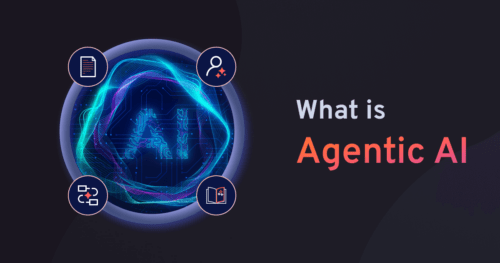
Agentic AI systems operate with a sense of agency, meaning they can independently set goals, make decisions, and execute actions based on their environment or user inputs. These systems are often built on advanced machine learning models combined with reinforcement learning, which enables them to learn from their actions and optimize their performance over time.
Agentic AI is particularly valuable in scenarios requiring complex decision-making or when tasks need to be executed in dynamic environments. However, its autonomy raises concerns about ethical use, safety, and accountability.
While both Generative AI and Agentic AI are subsets of artificial intelligence, they differ significantly in their objectives, functions, and applications. Let’s explore these differences in detail:
To better understand the differences, let’s compare their applications in real-world scenarios:
The rapid development of both Generative AI and Agentic AI brings exciting opportunities, but it also introduces complex challenges and ethical dilemmas. Generative AI faces concerns like data bias, misuse for creating deepfakes, and ensuring the quality of its outputs. Agentic AI, with its autonomous decision-making capabilities, raises critical issues around safety, accountability, and aligning its decisions with human values. As these technologies evolve, addressing these challenges will be essential to harness their potential responsibly while minimizing risks.
1) Bias in Data: Outputs can reflect biases present in the training data.
2) Misuse: Deepfakes and fake news generated by these systems pose significant risks
3) Quality Control: Ensuring the accuracy and relevance of generated content is challenging
1) Safety: Autonomous systems can make decisions with unintended consequences.
2) Accountability: Determining responsibility for AI-driven actions is complex
3) Ethics: Ensuring that autonomous systems align with human values and priorities
The future of Generative AI lies in its ability to augment human creativity. As models become more sophisticated, they will enable new forms of artistic expression, streamline content creation, and enhance human-computer interactions. However, improving transparency and addressing biases will remain critical challenges.
Agentic AI has the potential to revolutionize industries by automating complex tasks, from managing supply chains to performing surgeries. Its ability to operate autonomously makes it indispensable in dynamic and high-stakes environments. Future advancements will focus on improving ethical frameworks, safety mechanisms, and collaboration between humans and AI.
Generative AI and Agentic AI represent two distinct yet complementary aspects of artificial intelligence. While Generative AI excels in content creation and pattern recognition, Agentic AI stands out for its autonomy and decision-making capabilities. Together, these technologies are reshaping industries, driving innovation, and raising important ethical questions. Understanding their differences and potential applications is key to leveraging their capabilities effectively and responsibly.

Hey there! I’m Payal Tejwani, a SEO Executive at Kleverish dedicated to helping brands shine online. I focus on keyword research, on-page SEO, and content optimization to boost organic traffic and visibility. Always curious about the latest SEO trends, I enjoy turning insights into strategies that truly work.



 Rated 4.99/5 overall
across 100+ reviews
Rated 4.99/5 overall
across 100+ reviews